How LLMs are Changing Local Business Search 2026?
Large language models (LLMs) such as ChatGPT, Perplexity, and Google’s AI Overviews are transforming the way individuals discover local businesses. Unlike traditional search engines that merely scan your website, these systems analyze language, deduce meaning, and assemble your brand’s identity from various sources across the internet. If you perceive fluctuations in your local visibility, this transition is among the primary factors contributing to it.
Conventional local SEO practices, such as optimizing your Google Business Profile, ensuring NAP consistency, and generating reviews, remain important. However, it is now necessary to optimize for models that require enhanced context and more organized information. If these components are lacking, you may disappear from LLM-generated responses, even if your rankings appear satisfactory. When targeting a more localized audience, it is crucial to understand the necessary actions you must take.
Key Takeaways
- LLMs reshape how local results appear by pulling from entities, schema, and high-trust signals, not just rankings.
- Consistent information across the web gives AI models confidence when choosing which businesses to include in their answers.
- Reviews, citations, structured data, and natural-language content help LLMs understand what you do and who you serve.
- Traditional local SEO still drives visibility, but AI requires deeper clarity and stronger contextual signals.
- Improving your entity strength helps you appear more often in both organic search and AI-generated summaries.
How LLMs Impact Local Search?
Traditional local search results present options: maps, listings, and organic rankings.
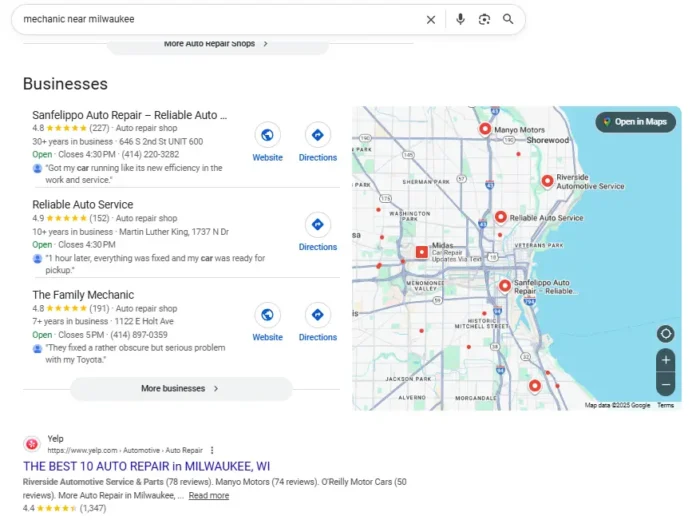
Large Language Models (LLMs) do not only provide options. Instead, they produce a response derived from the most distinct and robust signals at their disposal. If your organization fails to transmit these signals consistently, it will not be considered.
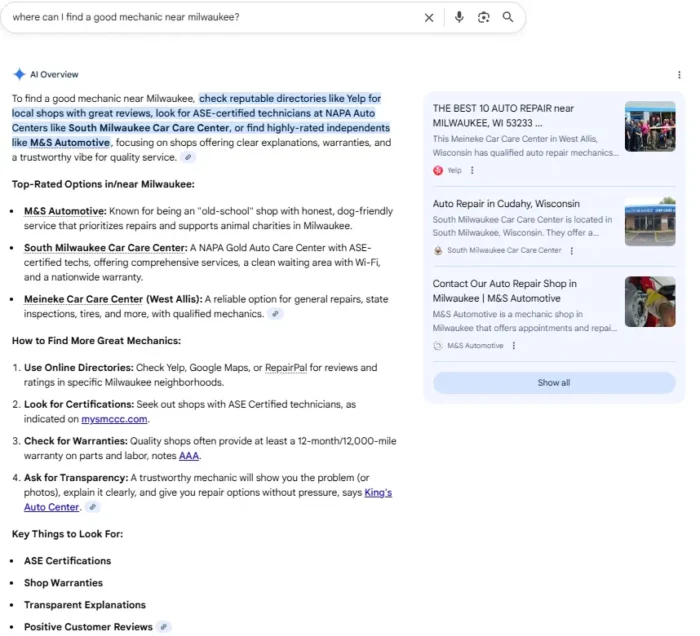
If your business details are inconsistent and your content lacks clarity, the model is less inclined to confidently link you to a specific search. This diminishes visibility, even if your conventional rankings remain unchanged. As illustrated above, these LLM responses are the initial elements that a user encounters on Google, rather than an organic listing. Furthermore, this does not consider the increasing number of users who are directly utilizing LLMs such as ChatGPT to address their inquiries, bypassing Google entirely.
How LLMs Process Local Intent
LLMs don’t use the same proximity-driven weighting as Google’s local algorithm. They infer local relevance from patterns in language and structured signals.
They look for:
- Reviews that mention service areas, neighborhoods, and staff names
- Schema markup that defines your business type and location
- Local mentions across directories, social platforms, and news sites
- Content that addresses questions in a city-specific or neighborhood-specific way
When customers indicate that you provide services in a particular district, region, or neighborhood, LLMs take note of this information. If your structured data contains details about service areas or specific location attributes, LLMs incorporate these elements into their analysis. Additionally, if your content addresses local issues or conditions relevant to your industry, LLMs utilize these indicators to comprehend your positioning.
This is important because LLMs don’t use GPS or IP address at the time of search like Google does. They are reliant on explicit mentions and pull conversational context, IP-derived from the app to get a general idea, so it’s not as proximity-exact relevant to the searcher.
These systems treat structured data as a source of truth. When it’s missing or incomplete, the model fills the gaps and often chooses competitors with stronger signals.
Why Local SEO Still Matters in an AI-Driven World of Search
Local SEO is still foundational. LLMs still need data from Google Business Profiles, reviews, NAP citations, and on-site content to understand your business.
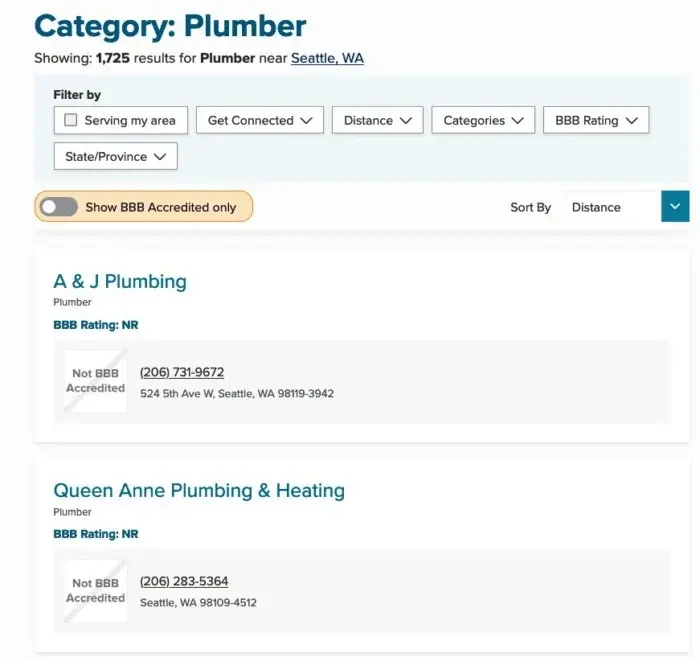
These elements supply the contextual foundation that AI relies on.
The primary distinction lies in the degree of consistency needed. If your business description varies across different platforms or if your NAP details are inconsistent, AI models detect this uncertainty. Such uncertainty prevents you from appearing in high-value generative responses. When a user poses a more specific branded query in a large language model, insufficient detail may result in outdated or incorrect information being presented about your business.
Local SEO gives you structure and stability. AI gives you new visibility opportunities. Both matter now, and both improve each other when done right.
Best Practices for Localized SEO for LLMs
To strengthen your visibility in both search engines and AI-generated results, your strategy has to support clarity, context, and entity-level consistency. These best practices help LLMs understand who you are and where you belong in local conversations.
Focus on Specific Audience Needs For Your Target Areas
Generic local pages aren’t as effective as they used to be. LLMs prefer businesses that demonstrate real understanding of the communities they serve.
Write content that reflects:
- Neighborhood-specific issues
- Local climate or seasonal challenges
- Regulations or processes unique to your region
- Cultural or demographic details
If you operate a roofing business in Phoenix, discuss the challenges posed by extreme heat and the process of tile-roof repair. If you are a dentist based in Chicago, mention local landmarks and address frequently asked questions by patients in that region.
The more local and grounded your content feels, the easier it is for AI models to match your business to real local intent.
Phrase and Structure Content In Ways Easy For LLMs to Parse
LLMs work best with content that is structured clearly. That includes:
- Straightforward headers
- Short sections
- Natural-language FAQs
- Sentences that mirror how people ask questions
Consumers type full questions, so answer full questions.
Instead of writing “Austin HVAC services,” address:
“What’s the fastest way to fix an AC unit that stops working in Austin’s summer heat?”
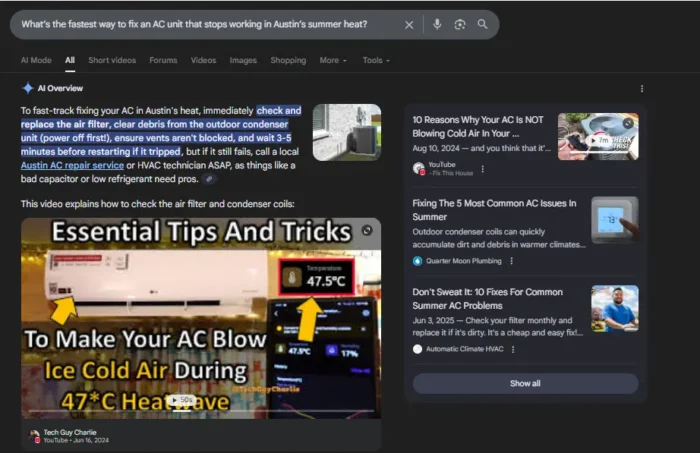
LLMs understand and reuse content that leans into conversational patterns. The more your structure supports extraction, the more likely the model is to include your business in summaries.
Emphasize Your Localized E-E-A-T Markers
LLMs evaluate credibility through experience, expertise, authority, and trust signals, just as humans do.
Strengthen your E-E-A-T through:
- Case details tied to real neighborhoods
- Expert commentary from team members
- Author bios that reflect credentials
- Community involvement or partnerships
- Reviews that speak to specific outcomes
LLMs treat these details as proof you know what you’re talking about. When they appear consistently across your web presence, your business feels more trustworthy to AI and more likely to be recommended.
Use Entity-Based Markup
Schema markup is one of the clearest ways to communicate your identity to AI. LocalBusiness schema, service area definitions, department structures, product or service attributes—all of it helps LLMs recognize your entity as distinct and legitimate.
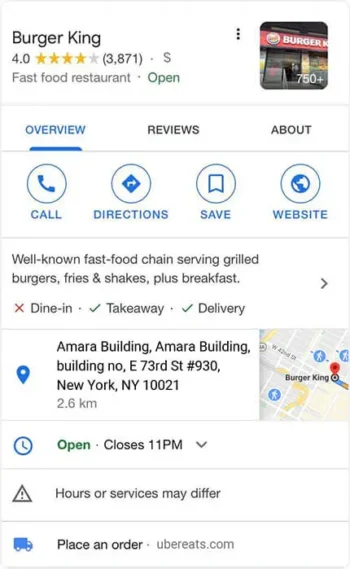
Source
The more complete your markup is, the stronger your entity becomes. And strong entities show up more often in AI answers.
Spread and Standardize Your Brand Presence Online
LLMs analyze your entire digital footprint, not just your site. They compare how consistently your brand appears across:
- Social platforms
- Industry directories
- Local organizations
- Review sites
- News or community publications
If your name, address, phone number, hours, or business description differ between platforms, AI detects inconsistency and becomes less confident referencing you. It’s also important to make sure more subjective factors like your brand voice and value propositions are also consistent across all these different platforms.
One thing that you may not be aware of is that ChatGPT uses Bing’s index, so Bing Places is one area to prioritize building your presence. While it’s not necessarily going to mirror how Bing will display in the search engine, it uses the data. Learn Seo course in islamabad to know things like Apple Maps, Google Mps, and Waze are also priorities to get your NAP info.
Standardization builds authority. Authority increases visibility.
Use Localized Content Styles Like Comparison Guides and FAQs
LLMs excel at interpreting content formats that break complex ideas into digestible pieces.
Comparison guides, cost breakdowns, neighborhood-specific FAQs, and troubleshooting explainers all translate extremely well into AI-generated answers. These formats help the model understand your business with precision.
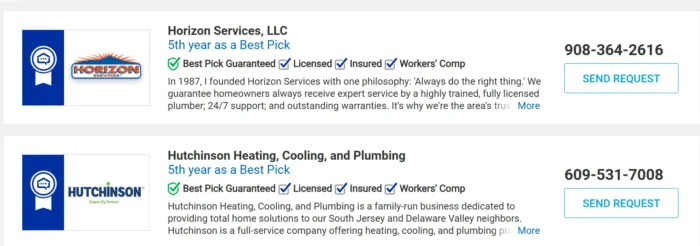
If your content mirrors the structure of how people search, AI can more easily extract, reuse, and reference your insights.
Internal Linking Still Matters
Internal linking builds clarity, something AI depends on. It shows which concepts relate to each other and which topics matter most.
Connect:
- Service pages to related location pages
- Blog posts to the services they support
- Local FAQs to broader category content
Strong internal linking helps LLMs follow the path of your expertise and understand your authority in context.
Tracking Results in the LLM Era
Rankings matter, but they no longer tell the full story. To understand your AI visibility, track:
- Branded search growth
- Google Search Console impressions
- Referral traffic from AI tools
- Increases in unlinked brand mentions
- Review volume and review language trends
This is easier with the advent of dedicated AI visibility tools like Profound.
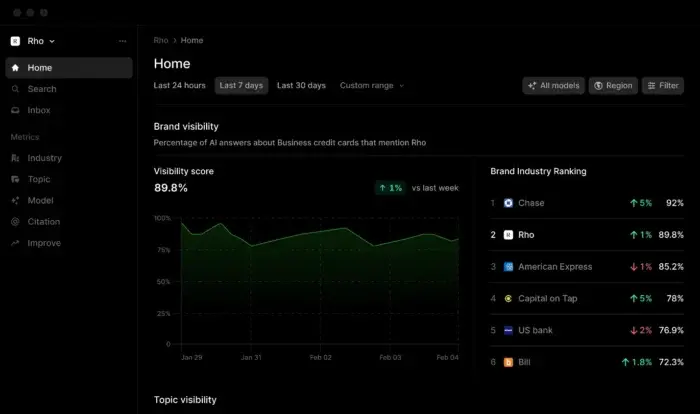
The goal here is to have a method to reveal whether LLMs are pulling your business into their summaries, even when clicks don’t occur.
As zero-click results grow, these new metrics become essential.
Frequently Asked Questions - FAQs
What is local SEO for LLMs like Chatgpt perply or gemini?
It’s the process of optimizing your business so LLMs can recognize and surface you for local queries.
How do I optimize my listings for AI-generated results?
Start with accurate NAP data, strong schema, and content written in natural language that reflects how locals ask questions.
What signals do LLMs use to determine local relevance?
Entities, schema markup, citations, review language, and contextual signals such as landmarks or neighborhoods.
Do reviews impact LLM-driven searches?
Yes. The language inside reviews helps AI understand your services and your location.
Conclusion
LLMs are rewriting the rules of local discovery, but strong local SEO still supplies the signals these models depend on. When your entity is clear, your citations are consistent, and your content reflects the real needs of your community, AI systems can understand your business with confidence.
These same principles sit at the core of both effective LLM AI Tools SEO and modern local SEO strategy. When you strengthen your entity, refine your citations, and create content grounded in real local intent, you improve your visibility everywhere—organic rankings, map results, and AI-generated answers alike.
Join us for learning SEO Course in Islamabad and start your Career as SEO Expert to work online for businesses.
- Learn Best Practice Local SEO - Work on bringing more SEO traffic for business
- Website SEOHow you can rank wesbite pages for business keyword, bring leads with Onpage and Offpage SEO strategy.
- Social Media MarketingLearn effectively execution of paid strategies on Facebook and Instagram Social media Marketing with clear ROI.
